

Coming up with great blog post ideas is hard. The best articles are helpful, and thought-provoking, and original. They have to attract the right people. They have to motivate those people to action.
And it's hard to juggle all of those necessary objectives in your head and harder still to create great ideas on a schedule. You can't fall back on phrases like "writer's block" and "muse" to buy yourself time — you need to be consistent in your output. You have to show up. Every day.
As a team of content marketers, we feel this challenge acutely. We also know that the best writers systematize their creativity with a concrete process. One such process has evolved organically throughout Animalz, used by writers in every part of the company. We call it the idea farm.
An idea farm is a single document that serves as the collection point for every nascent thought, opinion, or idea you have during the course of the day (or, let's be honest, night). Most of what you save will be ugly and ill-formed — and that's fine. By collecting ideas in one place, they're allowed to influence each other and generate new, better ones.
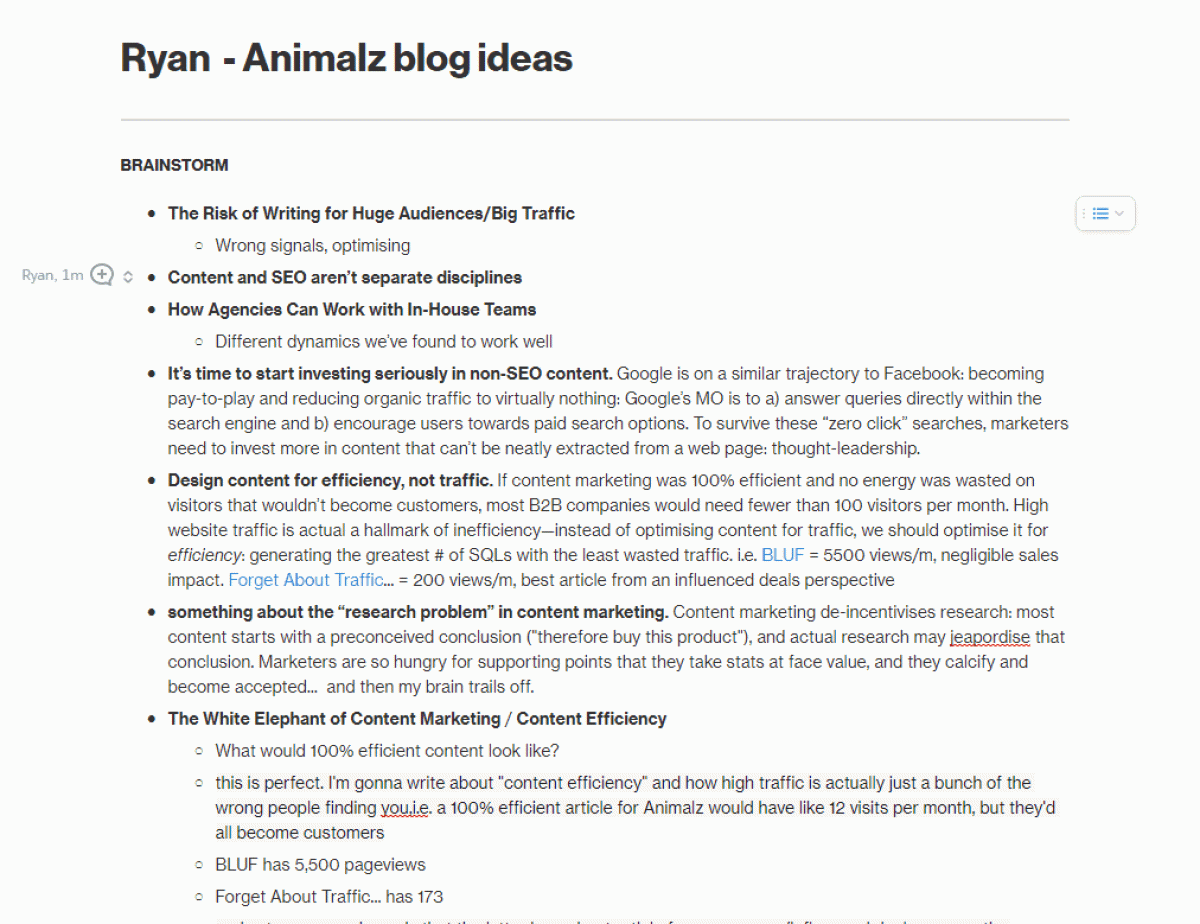
Creating a Google Doc with the aspirational title "Idea Farm" is a good starting point, but there are a few key processes that will help you get the most from it.
1) Collect the Seeds of Good Ideas
An idea farm works by collecting as much raw material — quotes, data points, observations, questions, you name it — as possible and “planting” it in a centralized place. This can be anything: a Google Doc, a Notion database, a spreadsheet tab, a note on your phone… This raw material doesn’t have to be polished and perfect. In fact, ugly and half-formed ideas are to be encouraged because they might provide exactly what’s needed — a useful hook or complementary angle — to improve another idea in the future. There is no downside to saving something in your idea farm, so be generous with ideas. Discount nothing, save everything, and listen to your gut. If something piques your interest, save it. Research for content marketing is a whole separate topic (which we’ll cover in another post — it’s still growing in my idea garden), but for now, here are my favorite sources of raw ideas:
Sales conversations and customer feedback
Internal meetings, conversations, and Slack channels
Unfinished snippets from past articles
Books, blogs, newsletters, and research papers
Forums, social media, and communities
(While less predictable, great ideas can also come from unexpected places — one of our most popular articles came from my experience researching digital cameras for a birthday present. )
When saving ideas, avoid going into too much detail. From experience, two to four short sentences are usually the best format for understanding, processing, and workshopping a new idea. A detailed bullet point outline at this early stage can limit your creativity and make it harder to imagine a new angle or framing.
Idea Farm Examples
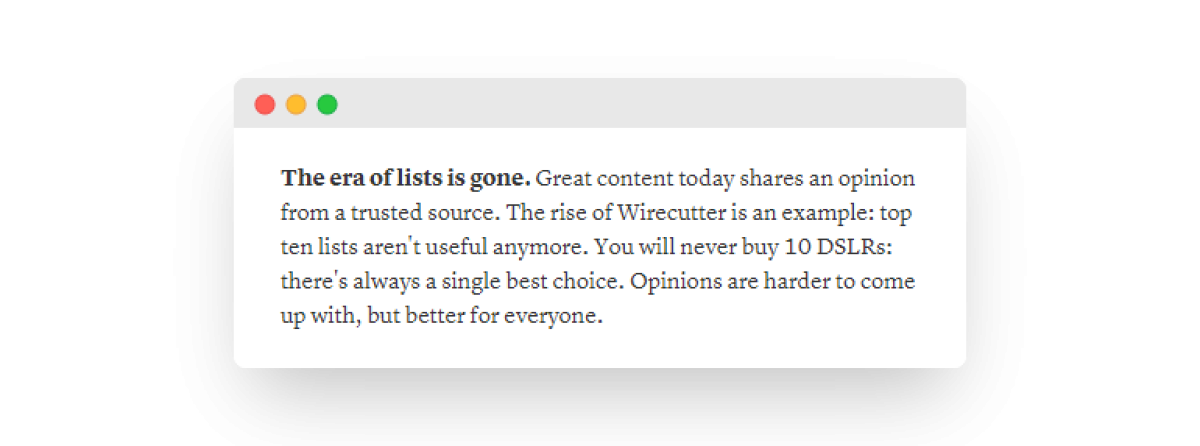
Here are a few examples from my own idea farm. This was the “seed” for the article that became Why Wirecutter Wins: Opinionated Content:
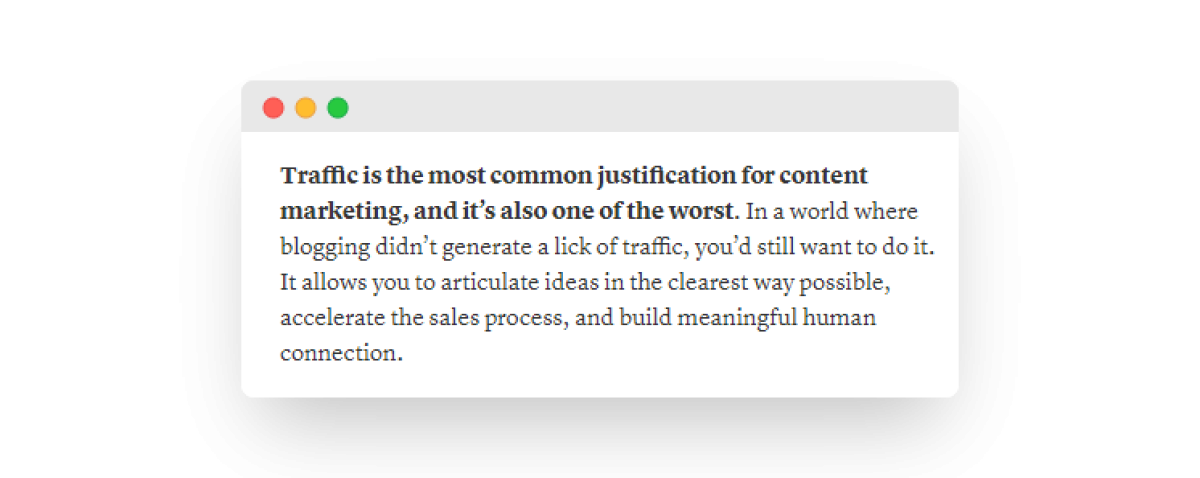
This idea became How to Fast-Track ROI From Your First Blog Post:
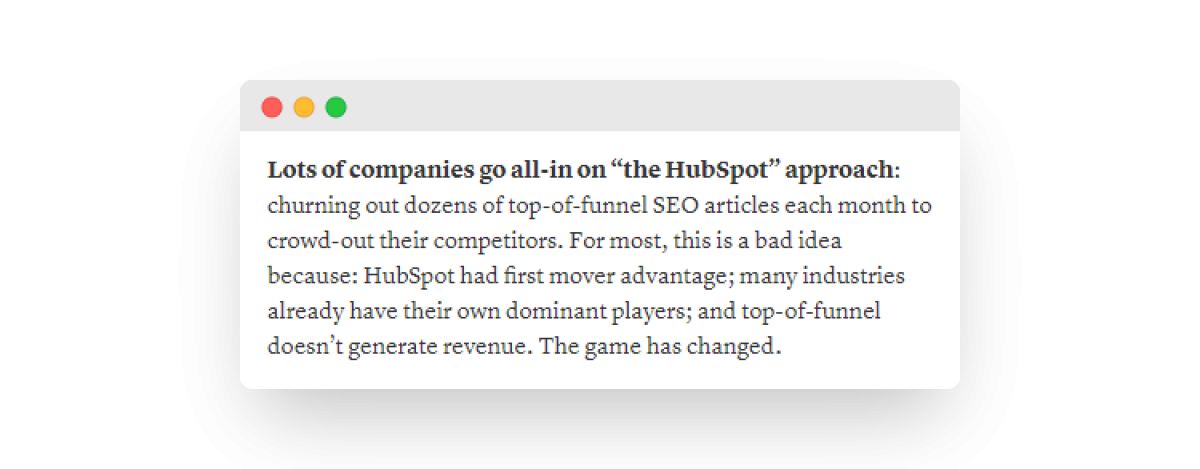
Here’s the snippet that eventually morphed into The Second Mover Advantage in Content Marketing:
2) Nurture Those Ideas to Fruition
In an idea farm, we accept that not every idea is immediately great — like wine or whiskey, a maturation process can improve its caliber.
Sometimes, this is a passive process: you simply don’t have the right data to make an idea work, or it just needs more time to develop. Great ideas are revealed by letting them grow wild in your idea farm, mulling them over in your subconscious, and adding new data whenever it comes to light. Other times, this is an active process. I’ve found three strategies particularly helpful:
Identify Commonalities
Often, it’s not the ideas themselves that mature into incredible blog posts but the common threads that connect those ideas. By looking for commonalities between your ideas, you can often find a bigger, better insight lurking just beyond the periphery of your vision. The Second Mover Advantage in Content Marketing is a perfect example. It started life as three separate-but-related ideas from my idea farm: one about the concept of “first movers,” one analyzing HubSpot’s approach to content, and one arguing that content marketing is no longer in the “early adopter” part of the technology adoption lifecycle.
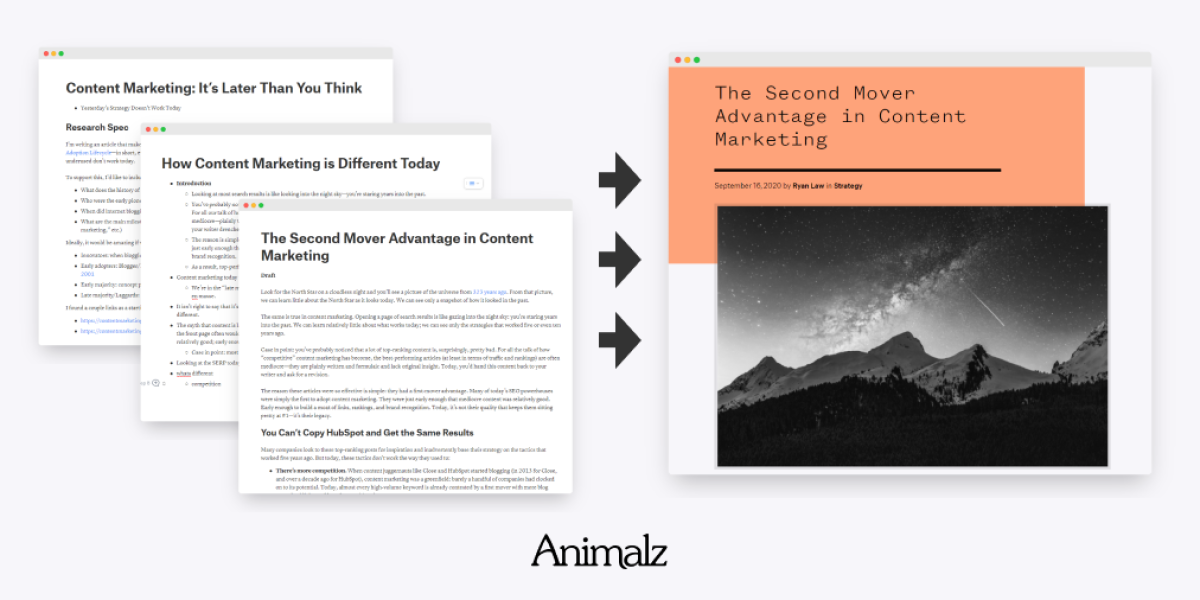
These half-finished ideas languished next to each other in my idea farm (even getting as far as three bad outlines) until I realized that these ideas were part of a single, bigger idea: that content marketers today have to embrace the role of second movers. Elements of all three appear in the finished draft, and the final article makes a more persuasive argument as a result.
Test New Angles
The difference between a good blog post and a great one can be as simple as finding the right angle — a novel, interesting way of framing the argument. Often, relatively useful ideas will find their way into your idea farm. These could be turned into functional blog posts there and then, but by leaving them to “mature,” you’ll often find a stronger, more interesting way to present the point.
The Auteur Theory of Content Marketing started life as a mind-numbingly simple idea: in marketing, it’s important to repeat yourself. We found a better angle by taking inspiration from another idea from the farm — High-Concept Content: the Hollywood Framework for Crafting Popular Content — and borrowing our hook from the world of cinema.
In a similar vein, “summarize your idea at the start of your article” borrowed from a military communications framework to become BLUF: The Military Standard That Can Make Your Writing More Powerful. “Don’t over-rely on SEO tools” metamorphosed through a few dozen variations until it became Copycat Content: SEO Tools Got Us Here, Humans Will Get Us Out.
Share Them with Someone Else
Commit your ideas to “paper” and it becomes much easier to pair up with a collaborator. They can help you identify your most compelling ideas, ask questions to further your thinking, and add their own brand of experience- and perspective-filled fertilizer into the mix. These collaborators can be colleagues, peers from your network, or if you’re feeling really brave — customers.
3) Harvest Ideas When They’re Ripe
Some ideas will be planted into your garden almost fully-formed and can be written and published right away. Other ideas will require weeks, months, even years to grow. Some will never make it but might just provide something useful for other ideas — like a decaying crop providing nutrients to the soil for those more successful plants around it. For those ideas that are somewhere between the two ends of this spectrum, it’s important to identify the characteristics that mean a blog post idea is ready to write. There are four factors I consider when vetting ideas:
Impact: How will this blog post influence your company and your goals?
Originality: Are you adding something new to the discourse?
Credibility: Is your argument the strongest it could be? Do you have the right evidence to validate it?
Timeliness: Is now the right time to share this story?
A high-impact article might solve a pressing customer problem, or target a lucrative keyword, or articulate a crucial part of your company’s philosophy. An original article offers a fresh perspective, setting you apart from other companies. A credible article has sufficient evidence to make a persuasive case. A timely article is published when the industry discourse is trending a certain way or in response to a certain problem cropping up time and time again. If it suits you, you could create a database of ideas and assign a point score across each of these dimensions: the highest-scoring article gets written. Personally, I use these like a mental mixing desk, looking for just the right combination of factors to know when an idea is ready.
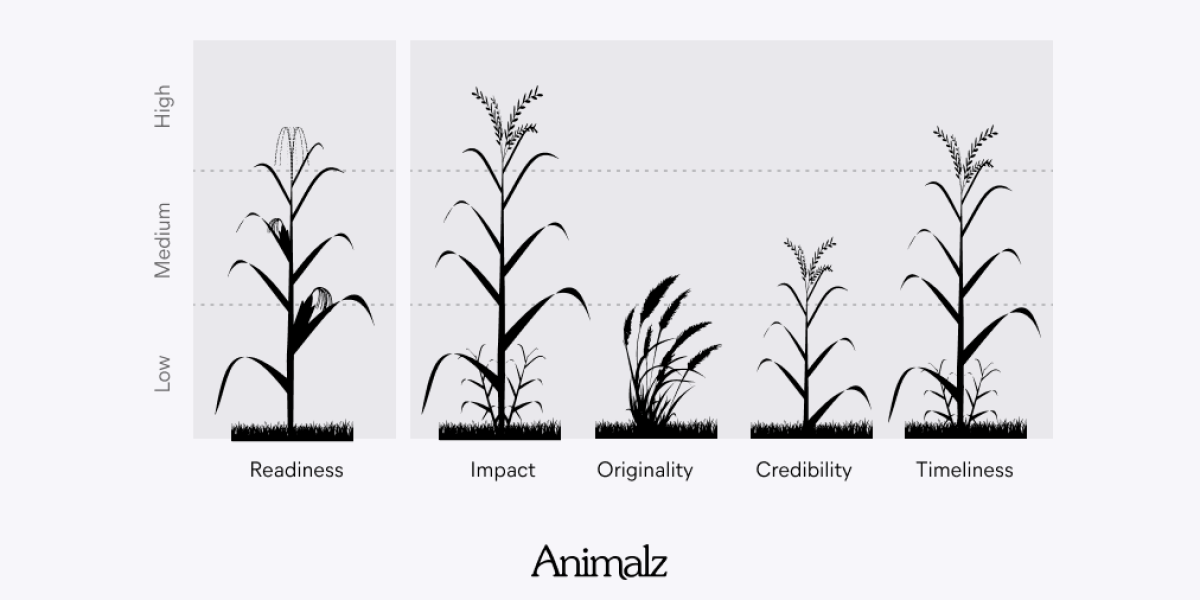
There are often trade-offs to be made during this evaluation process. If the zeitgeist favors your blog post idea, it might be worth accepting lower credibility just to get it out into the world. Alternatively, your highest-impact idea might be worth postponing to ensure you amass enough data to do it justice. I’ve wanted to write a guide to thought leadership content for years but waited until somebody with greater subject matter experience — Katie — was ready to take it on.
Help Your Ideas Grow
You can’t guarantee that every blog post idea is a winner, but you can increase the odds. The idea farm is a way of systematizing creativity and encouraging serendipitous interactions between ideas. The actual “idea farm” — your Google Doc or Notion database or physical notebook — is really a side effect of a bigger mindset shift. You’re recognizing that ideas can — and will — come from anywhere, and you’re giving yourself the tools to capture, nurture, and grow those ideas.